Last Drops of the Lucky Country
Tony & Co. is a design agency working across branding, digital, and product-focused projects.
Client
Type
Year
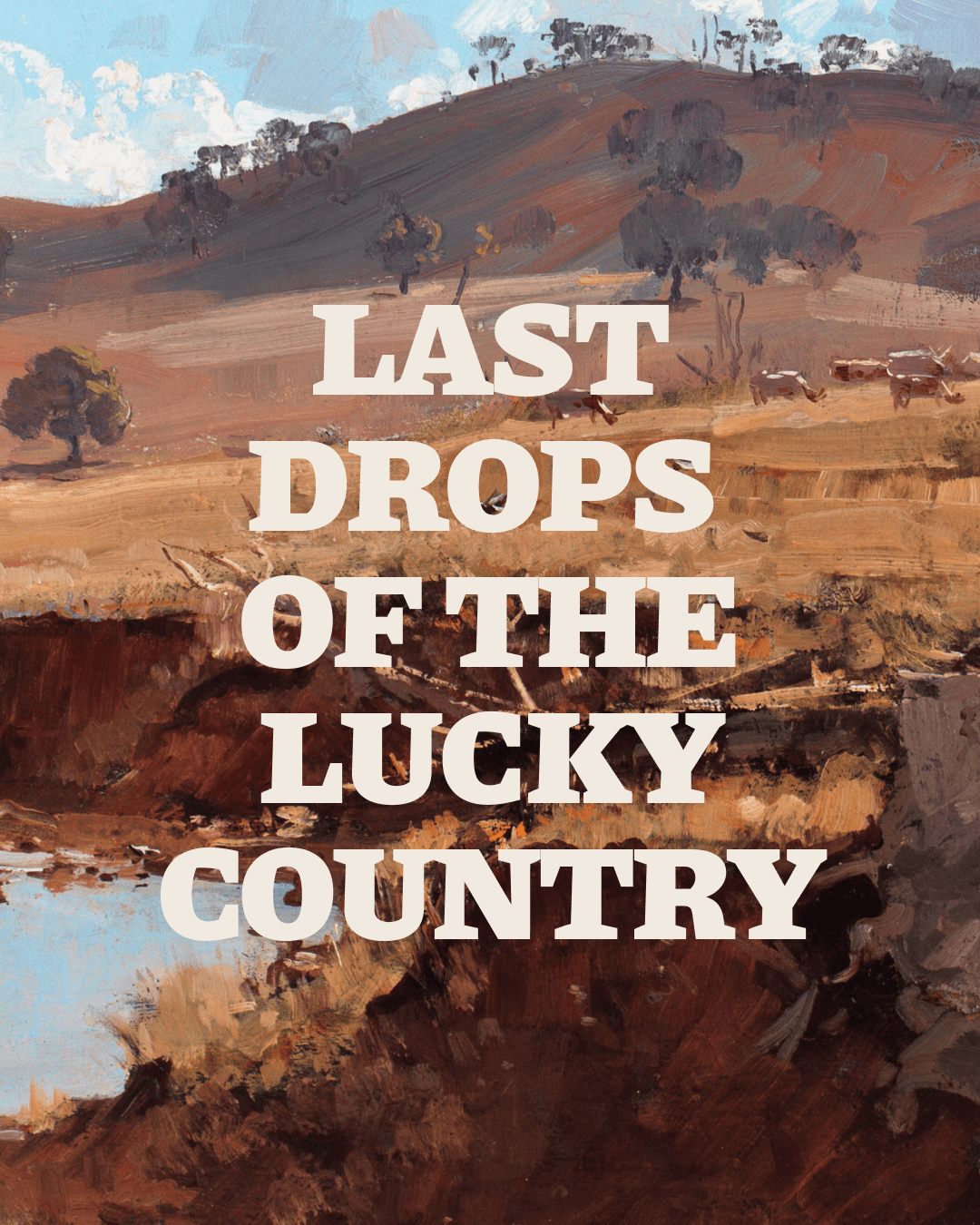
Back when Twitter was still called Twitter, and before most people had any first-hand knowledge of global pandemics, I was asked to take over a local government account and live Tweet the fine state of Queensland’s official innovation conference. I was given a free delegate pass, Twitter account login credentials, and supposed free reign to comment on all the speakers, startup pitches, and big brand sponsor keynotes I could find.
In the end, it wasn’t the South Park gif I posted that crossed the line. It was a comment, in response to a speaker spruiking the importance of renewable energy, that read something like: The Lucky Country was always supposed to be a warning, because luck runs out. But talent and renewable energy do not.
The post was taken down almost immediately. The government marketing team sent across a warning explanation. This topic - renewable energy - was considered too controversial. I decided then to stop tweeting for the rest of the day.
This happened in early 2019 in what now feels like simpler, sweeter times. Owning a home was a pretty reasonable and sane idea. Fuel prices were on a steady decline and, by the following year, would be the lowest in two decades. Most people thought little of Woolworths and Coles, in the sense there wasn’t much to think about between catalogue specials and celebrity chef appearances. The first Trump administration, while disruptive in all the worst ways, had not been as catastrophic as predicted - or as it would prove to be the second time around.
And yet, by 2026, everything seems to have soured. House prices have increased by 63% and the Saturday morning mosh pit of home inspections has done a lot to dispel any myth that avocado toast is to blame for killing the Australian dream. The corporate angels of the pandemic era, Woolworths and Coles, have fallen victim to their own greed and become some of the most distrusted brands in Australia. A world in disorder as a result of Trump 2.0, and an administration left unchecked and unwilling to abide by the rules and systems that had, until recently, maintained decades of global peace and meaningful, if slow, progress on everything from infant health to human rights.
I was broke in 2019. But, like many people, even if my pockets were perpetually empty, I still managed to carry a little belief. After all, the world continued on in some semblance of order, and even if that order contained countless injustices it also contained the idea that we could, one day, right them all. Hope wasn’t so hard to come by back then. It has always been easier to indulge in hope when luck is on your side. Yet, in the last decade we have experienced an explosion in political polarisation, record-breaking climate disasters, and a global pandemic that shuddered the world and re-shaped how we work, live, and interact with one another. We’ve uncovered termites in the foundations of global relations, and watched in horror at the ineptitude of institutions to do anything about it. War, conflict, and atrocity have become daily bulletins so routine that they have lost almost all impact - until the bullets found their way onto our own beaches.
[Read the full essay on my Substack.]